In South Africa, very few reporting areas are designed to meet the needs of child victims of abuse. Many children face intimidating and unsupportive environments when reporting crimes, which can increase trauma and compromise evidence collection. Matla A Bana (MAB) addresses this gap by upgrading hospital and court spaces and establishing dedicated reporting facilities at SAPS Family Violence, Child Protection and Sexual Offences (FCS) Units, ensuring children experience safe, structured, and supportive environments during the reporting and assessment process
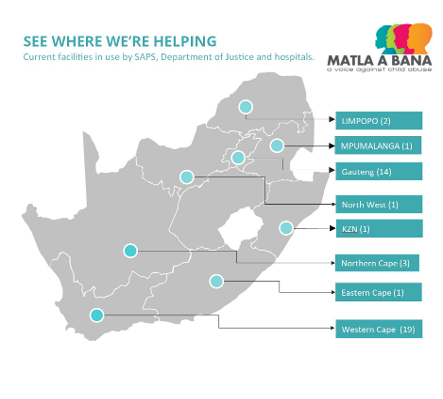
To implement standardized, victim-friendly reporting facilities at all SAPS FCS units, Sexual Offences Courts and hospitals in high child-abuse reporting areas, ensuring children have safe, supportive spaces while engaging with the justice. Currently 42 facilities in 8 provinces implemented by MAB at police units, courts and hospitals are in use.

When a child reports rape, the process from giving a statement to undergoing a medical exam can take up to 12 hours. During this traumatic time, children are often left without food, clean clothing, or emotional comfort — increasing the risk of secondary trauma.
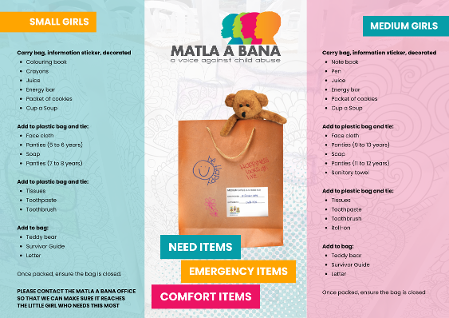
Matla A Bana provides comfort packs to SAPS FCS units for children reporting abuse. These packs offer immediate care, dignity during a highly traumatic time, while also helping to build trust between the investigating officer and the child—often leading to quicker and more open disclosure. Each item in the pack is carefully researched and selected for a specific purpose. We prioritise quality, including specially formulated nutrition bars that provide the equivalent of a full meal, and locally produced underwear to ensure comfort and support local businesses. We require 100 packs per age group, per month, per province. Currently, we focus on girls aged 5–8 (small) and 9–12 (medium).
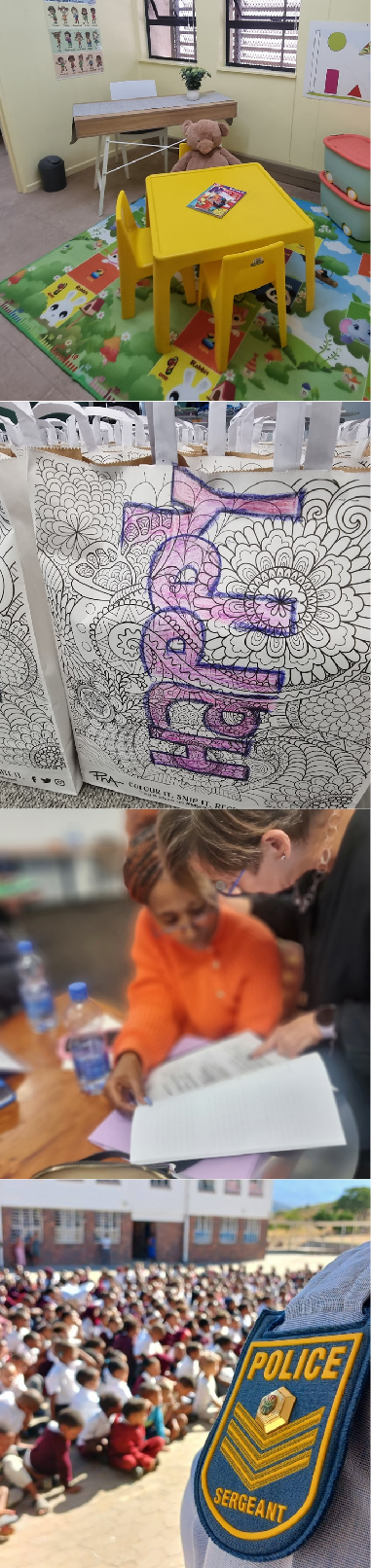
Despite their critical role, police officers and sexual offences prosecutors are often not trained in the life skills needed to engage sensitively with traumatised child victims. Their professional training focuses on solving crimes, arresting perpetrators, and securing convictions. However, the public rightly expects these professionals to demonstrate empathy, emotional intelligence, and child-sensitive communication. The absence of these skills can lead to harmful situations.
Matla A Bana has developed specialised training courses that equip police officers and sexual offences prosecutors with the soft skills needed to engage sensitively and effectively with traumatised child victims. The programme emphasises emotional intelligence, communication, client service, and child-centred approaches, enabling officials to create safer, more supportive reporting environments that reduce secondary trauma and help children disclose abuse more clearly
In 2013, University of Johannesburg marketing students found that children often don’t report sexual abuse due to stigma, lack of trust in the system, and not knowing how or where to report. Those in rural and under-resourced areas face even greater barriers due to limited access to information and support.
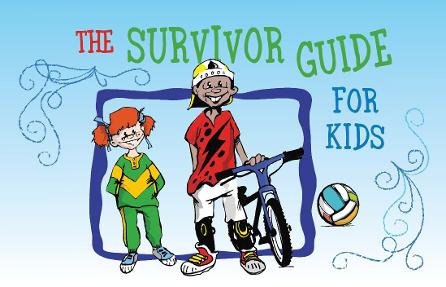
Matla A Bana developed a school-based prevention programme using theatre, along with a simple, multilingual therapy guide (Survivor Guide) for children without access to professional support. After a rise in bullying post-COVID-19, “Don’t Bully” became a key focus. Delivered in English and Afrikaans, the programme is implemented with SAPS FCS Units in high-risk areas and supported nationally through the Xtreme for Kids Cycle Tour.


Matla a Bana can be commended for the efficiency with which it has delivered the agreed project deliverables with the moneys allocated to them. The projects appear to have been well-coordinated and the training feedback indicates a high level of satisfaction with the quality of the presenters and value of the training. For an organisation which does not employ permanent staff and is reliant solely on contracted resources to deliver its projects and initiatives, the organisation is clearly making a very significant impact in addressing the challenges presented by child victims of abuse in South Africa.